
Portable Generator Transfer Switch vs. Interlock vs. Standby: A Montana Winter Guide
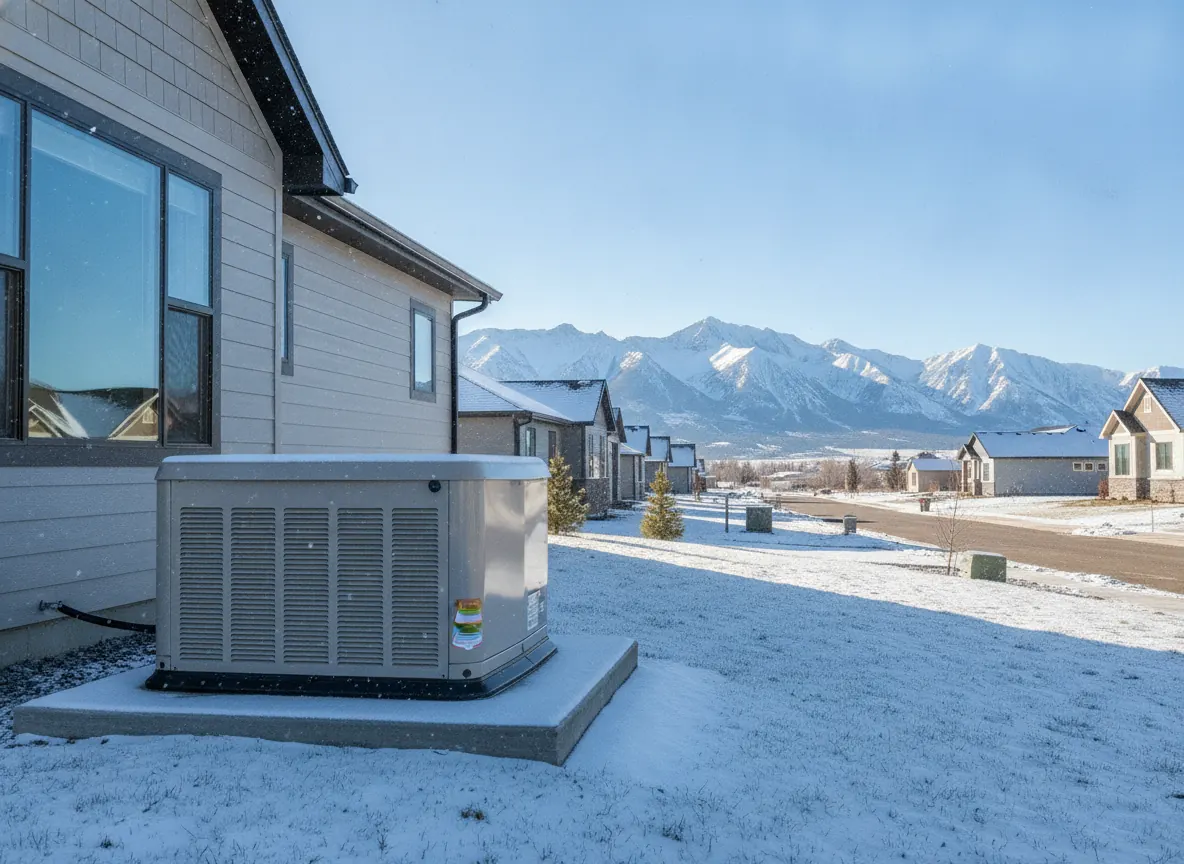
A winter outage in Bozeman, MT is not just an inconvenience. At -20°F, a house without a furnace blower cools fast, a well pump stops, and heat tape on the pipes goes cold. That is why so many Gallatin Valley homeowners look at backup power after a storm or a long cold snap. The generator is the easy part to choose. The connection to your house is where the safety rules and the real cost sit.
This guide compares the three common setups, explains what NorthWestern Energy requires, and lists what to ask before you hire.
Never backfeed. Do not connect a generator to your house through a dryer outlet, a wall outlet or a cord with two male plugs. It can energize the utility lines and injure line workers and neighbors, and it can damage the generator when power returns. NorthWestern's generator safety page says: "Do not connect the output of your generator directly to your house wiring or service panel."
What NorthWestern requires
NorthWestern's Montana Electric Service Requirements (July 2025), §7.1, says standby generators "are to be connected to the customer's wiring system by a permanently installed transfer switch" that is break-before-make, designed so the generator cannot connect to NorthWestern's system in any mode. It adds: "Small portable generators shall not be connected to the customer's wiring system unless a transfer switch is installed properly." Its generator safety page tells customers to "have a licensed electrician perform the wiring needed to connect the generator."
Park Electric Cooperative members should check with the co-op for its own rules. Park Electric uses "one-shot" protection settings in fire season, from early July to early October, where a line that faults stays off until crews inspect it. The co-op notes this can mean more frequent outages for rural members, which is another reason some households plan for backup power.
Interlock vs. transfer switch vs. standby: the options
| Setup | How it works | Typical installed cost (national estimates) |
|---|---|---|
| Portable generator + panel interlock kit | A mechanical plate on your main panel that makes it impossible to have the main breaker and the generator breaker on at once. A cord runs from the generator to an inlet box outside. | $400–$850 (HomeGuide) |
| Portable generator + manual transfer switch | A small subpanel next to the main panel feeds a handful of chosen circuits. You flip each circuit from utility to generator. | $400–$1,300 (HomeGuide) |
| Standby generator + automatic transfer switch | A permanently installed generator, usually on natural gas or propane, starts on its own and switches the load when the grid drops. | about $8,000–$16,000 (manufacturer guidance via retailer) |
These are published national cost-guide estimates, not quotes. Quotes come from independent contractors, not this site. Whether an interlock is acceptable for your panel depends on the panel make and model, the listed kit, and the inspector. Ask the electrician which device they plan to use and confirm it meets NorthWestern's break-before-make requirement.
Which setup fits a Montana winter?
- Interlock kit: often the lowest cost way to run a portable generator safely. It can power any circuit in the panel, so you must manage the load yourself and not overload the generator.
- Manual transfer switch: simpler to use under stress, because the circuits are already chosen. Good if you only need the furnace, well pump, fridge and a few lights.
- Standby: starts while you are away, which matters for a second home in Big Sky, a rental, or anyone who travels in winter. Needs a pad, fuel supply, clearance from windows and vents, and sometimes a larger gas meter or propane tank.
Whatever you choose, a portable generator has to run outdoors, well away from doors, windows and vents, and never in a garage. Snow and wind make that harder, so plan a spot and a cord route before the outage, not during it.
Sizing for a furnace blower and a well pump
Do not size a generator from the box alone. List what you actually need during an outage, then have the electrician check the nameplates and starting loads:
- furnace or boiler controls and blower (gas and propane heat still need power)
- well pump, which can draw a large current when it starts
- sump pump, if you have one
- refrigerator and freezer
- pipe heat tape and any roof heat cable
- a few lighting circuits, internet and phone charging
- medical equipment
Heat pumps, electric baseboard, electric water heaters and EV chargers are large loads. Many portable generators cannot run them. If your home relies on electric heat, ask whether the plan should include a standby unit or a load-management device.
Permits, inspections and the homeowner exemption
A transfer switch, interlock or standby generator connects to your service equipment, so it is permit work. Bozeman, Belgrade and Manhattan issue electrical permits inside city limits; everywhere else in the valley, including Livingston, Three Forks, Big Sky and Four Corners, permits come from the Montana Department of Labor & Industry (DLI electrical permits). Montana adopted the 2023 National Electrical Code statewide effective September 26, 2026; certified cities enforce their adopted codes, so your electrician will follow whichever applies.
Montana's homeowner exemption, MCA 37-68-103(3), lets an owner do electrical work on property maintained for their own use, done personally, with a permit and inspection. It does not cover rentals, and the statute specifically excludes work on a grid-tied generator. Given the backfeed risk and NorthWestern's instruction to use a licensed electrician, this is a job to hire out.
Questions to ask before you hire
- What is your Montana license number, and what name is it under? (Check it at the DLI license lookup.)
- Can I see a certificate of liability insurance?
- Which device will you install, and is it break-before-make as NorthWestern requires?
- Which circuits will it cover, and can the generator I have run them?
- Who pulls the permit, and is it the city or the state?
- Does the price include the inlet box, cord, pad, fuel connection and inspection?
- Is there a trip fee, and what is the after-hours rate if I call during an outage?
- Can I get a written, itemized quote before work starts?
Montana gives buyers a three-business-day right to cancel many in-home sales (MCA 30-14-504). Check whether it applies to your contract, and do not pay in full upfront.
For more, see generator installation, panel upgrades if your panel has no room, the Bozeman cost guide, and who to call in a Bozeman power outage. Bozeman Electricians is a free quote-referral service, not an electrician; request quotes and independent licensed contractors can reply.
Frequently asked questions
Is a generator interlock legal in Montana?
Interlock kits are widely used, but whether one is accepted depends on the panel, the listed kit and the inspector. NorthWestern requires a permanently installed break-before-make transfer device. Ask a licensed electrician which option meets the rules for your panel, and get it permitted and inspected.
How much does a generator transfer switch cost?
National cost guides put a manual transfer switch at about $400 to $1,300 installed and an interlock kit at $400 to $850 (HomeGuide). A standby generator with an automatic switch runs about $8,000 to $16,000. These are estimates, not quotes.
Can I install a transfer switch myself in Montana?
Montana's homeowner exemption covers some work on your own home with a permit, but it excludes grid-tied generators, and NorthWestern tells customers to have a licensed electrician do generator wiring. Because of the backfeed risk, hire a licensed electrician.
What size generator do I need to run my furnace and well pump?
It depends on the nameplate and starting loads of your equipment. Well pumps can draw a large current when they start. List what you need during an outage and have an electrician size the generator and the transfer switch together.