
What Size Wire Does a Hot Tub Need? A Montana Winter Guide
Short answer: the wire size for a hot tub follows the circuit size, and the circuit size comes from the tub's nameplate and installation manual. Most 240 V tubs call for a 40, 50 or 60 amp circuit. As common examples, a 50 amp circuit is often run with 6 AWG copper, and a 60 amp circuit with 6 or 4 AWG copper depending on the wire type and run length. A licensed electrician makes the final call after checking the manual, the distance and the panel.
This post explains how that sizing works and what a Montana winter adds. If you are ready to hire, the hot tub wiring page covers the job, costs and what to ask in Bozeman, MT.
Start with the tub's manual, not a chart
Every hot tub lists its electrical requirements on a label and in the installation guide: voltage, the breaker size it needs, and often the wire size the manufacturer expects. Two tubs that look the same can differ, because heater size and the number of pumps change the draw. Get the manual before asking for quotes, and send it to every contractor so they price the same circuit.
What decides the wire size
- Breaker size. The conductor has to be rated for the breaker protecting it.
- Wire type and temperature rating. Individual conductors in conduit and cable assemblies carry different ratings, and terminals at each end limit what can be counted.
- Run length. Long runs across a yard lose voltage, so electricians often go up a size on a long trench.
- Number of conductors. Many 240 V tubs need two hots, a neutral and an insulated copper grounding conductor, because some controls run at 120 V. The code has specific grounding rules for hot tubs.
- Wiring method outdoors. Buried and exterior runs use wire and conduit rated for wet locations.
| Tub type | Typical circuit | Often seen wire size |
|---|---|---|
| Plug-and-play 120 V tub | Dedicated 15 or 20 A GFCI circuit | 14 or 12 AWG, per manual |
| Small 240 V tub | 40 A, 240 V | 8 AWG |
| Typical 240 V tub | 50 A, 240 V | 6 AWG |
| Larger tub or swim spa | 60 A, 240 V or more | 6 or 4 AWG, depending on wire type and length |
50 amp or 60 amp?
Many tubs can run on either, with a setting in the control board. On a 50 amp circuit, some tubs limit the heater while jets run. On 60 amps, they may heat and run pumps at the same time. In a Bozeman winter that difference can matter: with a 15.1°F average January low at MSU (NOAA 1991–2020), the heater works harder, and a tub that cuts heat while the jets run can lose temperature on long soaks. Ask whether your panel can carry 60 amps without an upgrade before choosing.
A plug-and-play 120 V tub avoids the 240 V circuit, but in deep cold it can heat slowly. If you buy one, ask the electrician to confirm the outlet is on its own GFCI-protected circuit.
The GFCI disconnect and where it goes
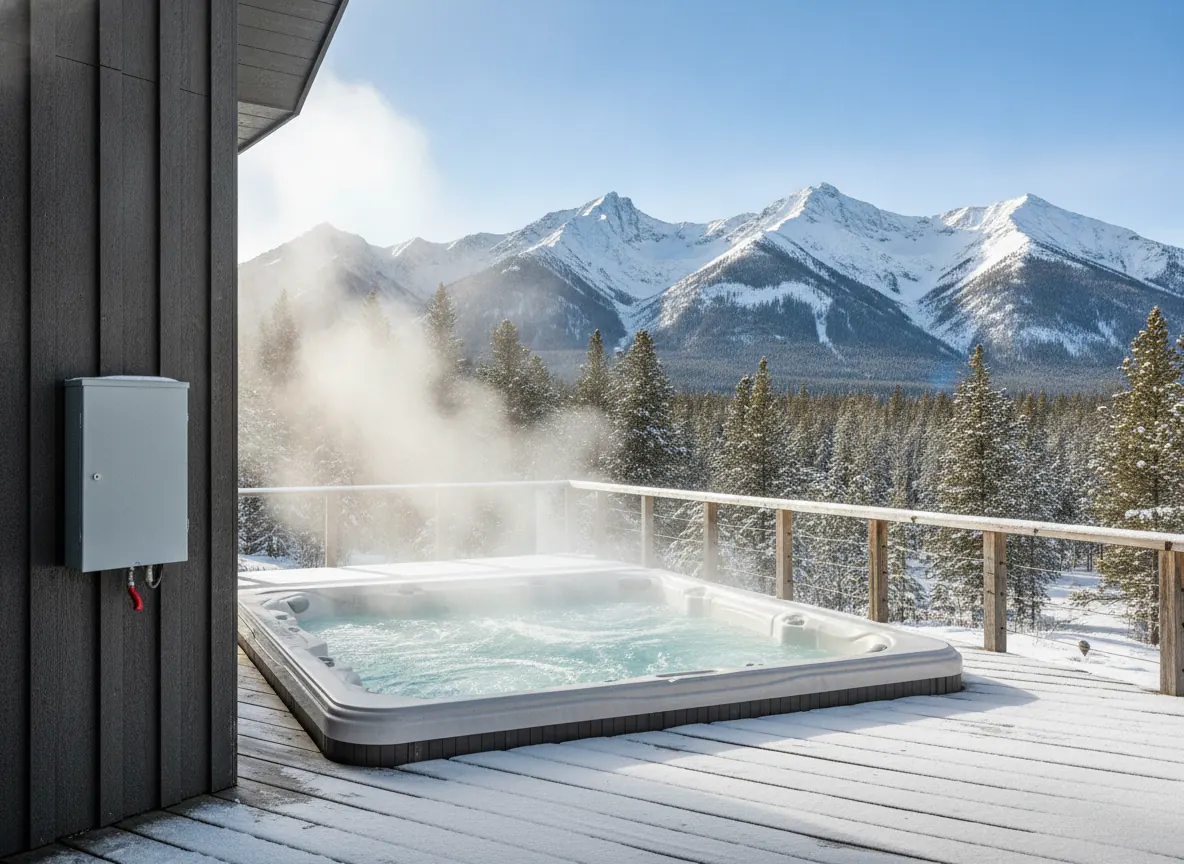
Hot tubs need GFCI protection, usually in a spa disconnect box between the house panel and the tub. The code calls for an emergency shutoff within sight of the tub and at least 5 feet away from its inside wall, so someone in the water can't reach it, and the box is usually placed where it's easy to get to in winter. Your electrician and inspector confirm the exact spot for your yard or deck. Ask where the box will go before the deck is built, and keep a path to it shoveled.
Trenching and frost: what to ask
A tub away from the house often means a trench. Burial depth depends on the wiring method and conduit, and Montana's frost depth adds a practical reason to plan carefully. We don't give a depth here; ask each contractor what depth and conduit they propose and why. Have underground utilities located before anyone digs, and ask whether the trench, backfill and any lawn or paver repair are on the quote.
When the power goes out in winter
A tub without power in subzero weather can freeze. Bozeman has seen both deep cold (-40°F at MSU on January 13, 2024) and wind outages: a storm on September 11, 2024 left more than 9,000 NorthWestern customers without power. Practical steps:
- Keep the cover on and locked down; it holds heat for a while.
- Know your tub's freeze-protection mode and how to drain it, from the manual.
- Check NorthWestern's outage map or call 888-467-2669 for restoration updates.
- If you plan a standby generator, ask whether the tub is on the transfer switch; its heater is a large load.
Never backfeed a generator into house wiring. NorthWestern requires a permanently installed break-before-make transfer switch. See generator installation and the Bozeman power outage guide.
Permit and cost
A new hot tub circuit needs an electrical permit. Bozeman, Belgrade and Manhattan issue electrical permits inside city limits; everywhere else in the valley, including Livingston, Three Forks, Big Sky and Four Corners, permits come from the Montana Department of Labor & Industry. The state fee for one added circuit is $45 (DLI form, Rev. 11/25); city fees are set by the city, so ask the contractor or the city building division. Published 2026 contractor guides put a 240 V hot tub circuit with a GFCI disconnect at about $1,200–$2,800, more with long trenches. These are estimates, not quotes; see the Bozeman electrician cost guide.
Before you hire: send the tub manual, a photo of your panel and the distance from the panel to the tub. Ask each contractor for a written, itemized quote showing the breaker size, wire size and type, disconnect, trench, permit and inspection. Montana requires electricians and electrical contractors to be licensed by the State Electrical Board (MCA Title 37, ch. 68). Look up any contractor or electrician by name or license number in the Montana DLI license lookup, and ask to see the license; electricians must carry it on the job.
If the tub's GFCI keeps tripping in winter, read why breakers trip in winter before resetting it again.
About this site: Bozeman Electricians is a free quote-referral service, not an electrician or electrical contractor. It holds no Montana electrical license and does not perform electrical work. You describe the job once, and independent electrical contractors licensed by the Montana State Electrical Board and serving Bozeman, MT and the Gallatin Valley can reply with quotes on their own schedules. Some contractors may pay to receive requests or calls. Request free quotes.
Frequently asked questions
What size wire do I need for a 50 amp hot tub?
A 50 amp circuit is often run with 6 AWG copper, but the tub's manual, the wire type, terminal ratings and run length decide the final size. A licensed electrician sizes it and the inspector checks it.
What size wire for a 60 amp hot tub?
Commonly 6 AWG copper for individual conductors in conduit, or 4 AWG where the wire type or a long run calls for it. Check the manual and have a licensed electrician size the circuit.
How far does the hot tub disconnect need to be from the tub?
The code calls for an emergency shutoff within sight of the tub and at least 5 feet from its inside wall. Your electrician and inspector confirm the exact placement for your site.
Do I need a permit to wire a hot tub in Montana?
Yes. Outside Bozeman, Belgrade and Manhattan the state permit for one added circuit is $45 (DLI form, Rev. 11/25). Inside those cities, the city issues the permit and sets the fee. The licensed contractor normally pulls it.